
9 Corporate Entertainment Ideas That Actually Work
Tired of the same recycled entertainment list? Here are 9 corporate entertainment ideas that actually hold a business crowd, and what each one costs.
9 Corporate Entertainment Ideas That Actually Work
Most corporate entertainment ideas lists read like the same recycled options copied from site to site. A DJ, a photo booth, a raffle. None of it holds a room past the first ten minutes, and none of it gives your team anything to talk about the next morning. Here are 9 corporate entertainment ideas that actually work, because each one gives people a reason to put the phone down instead of just filling airtime.
1. Strolling Magic During the Reception
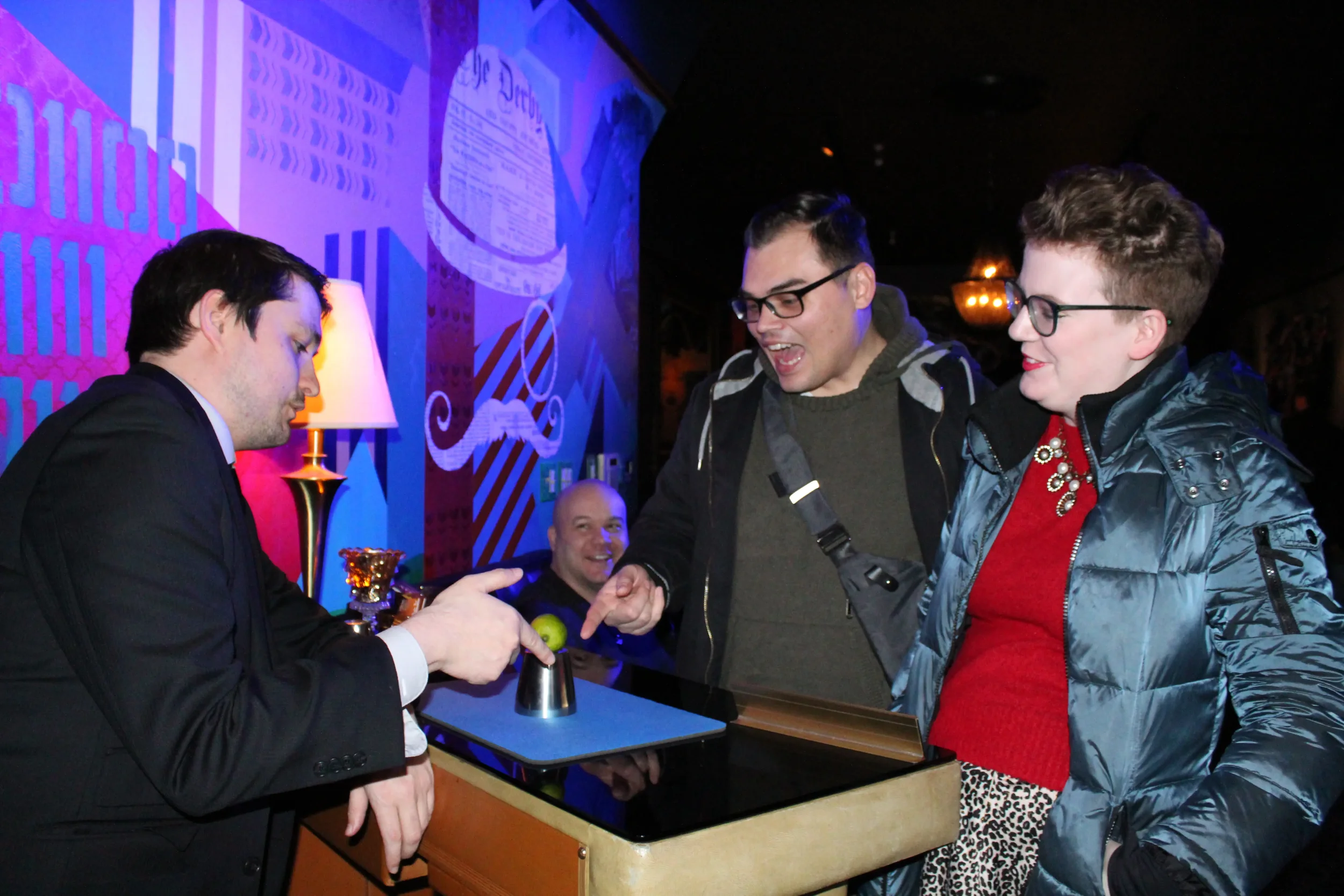
The reception is the deadest part of most corporate events. Guests who do not know each other stand in small clusters or check email while they wait for the program to start. Strolling magic fixes that specific gap by working table to table, giving strangers a shared reaction in the first sixty seconds instead of forty minutes of small talk.
2. A Comedy Magic Show as the Main Program
For a formal program, a comedy magic show runs 45 to 60 minutes with guests participating from their seats and volunteers coming up to become the story. This works because it is built on participation, not passive viewing, which is the difference between an audience that remembers the night and one that does not.
3. The Combo: Strolling Plus a Stage Show
Most corporate clients who book both get the highest return on the entertainment budget. Strolling warms the room during cocktail hour, so guests already know the performer by the time the stage show starts, and that familiarity makes the main program land harder.
4. Interactive Trade Show Entertainment
A booth on a convention floor competes with a hundred other booths doing the same spinning wheel and candy bowl. Close-up magic worked at the booth perimeter draws a crowd that your booth staff can then convert into a warm conversation instead of a badge scan and a walk away.
5. Team Building Built Into the Entertainment
A magic show doubles as an informal team building exercise because the entire format depends on volunteers from your own team becoming the stars of the story in front of their coworkers. You get entertainment and a shared moment for the team in the same booking, without a separate facilitator or a forced icebreaker exercise.
6. A Themed Keynote Instead of a Standard Speaker
For a general session or sales kickoff, a keynote built around interactive magic proves the point instead of just stating it. A volunteer on stage becomes living proof of the idea being pitched, which is a different retention mechanism than a standard motivational talk.
7. Photo Booths, and Why They Rank Lower Than You Think
A photo booth is a fine add-on but a weak centerpiece. It gives guests a prop, not a shared experience, and it does nothing to fix a quiet reception or a flat main program. Use it as a secondary touch, not the main entertainment line item.
8. Live Music, and Where It Actually Fits
A band or DJ is the right call when the goal is dancing and atmosphere, particularly for an evening built around a dance floor. It is the wrong call when the goal is engagement during a reception or a formal program, since music alone does not give guests a reason to talk to strangers or remember a specific moment.
9. A Combined Program Instead of Picking Just One
The strongest corporate events do not pick a single entertainment line item. They build a night where strolling magic covers the reception, a comedy magic show anchors the program, and music takes over once the formal portion ends and the dance floor opens.
What separates entertainment that works from entertainment that does not:
It gives guests something to participate in, not just watch
It fixes a specific dead spot on your event timeline
It creates a moment your team is still talking about the following Monday
It fits the room you actually have, not a generic setup
What It Costs
Corporate entertainment in this range runs $2,500 to $5,000 depending on format, audience size, and travel, with strolling-only bookings at the lower end and a full combo toward the top.
Why the Fee Is Event Insurance
The fee is not for novelty. It is risk reduction. Your event happens once, in front of the people who approved the budget, and if the entertainment falls flat there is no second night to fix it. You are paying for the certainty that the room stays engaged from the first fifteen minutes to the last.
FAQ
What is the single best corporate entertainment idea for a small event?
Strolling magic. It requires no stage or sound system and works for groups as small as 20 people.
Can these ideas combine with a DJ or band we already booked?
Yes, strolling magic during the reception and a comedy magic show before the dance floor opens both pair cleanly with existing music plans.
How far in advance should we book entertainment like this?
Most corporate dates lock in 2 to 4 months out, earlier for fall and December when calendars fill fast.
Does this work for a small internal meeting, not just a big event?
Yes, strolling magic and shorter interactive formats scale down to groups of 20 to 30 in a standard meeting room.
What if we are not sure which format fits our event?
A short call covers your room, audience size, and timeline, and the right format usually becomes obvious once those details are on the table.
Is the material appropriate for a mixed executive and staff audience?
Yes, the humor stays clean and self-aware so it lands with leadership and staff in the same room.
Ready to build the right entertainment lineup for your event?
