
Trade Show Marketing With Magic: Turning Booth Spend Into ROI
Booth budgets get wasted on swag nobody remembers. Here is how trade show marketing with magic turns foot traffic into real leads, and what it costs.
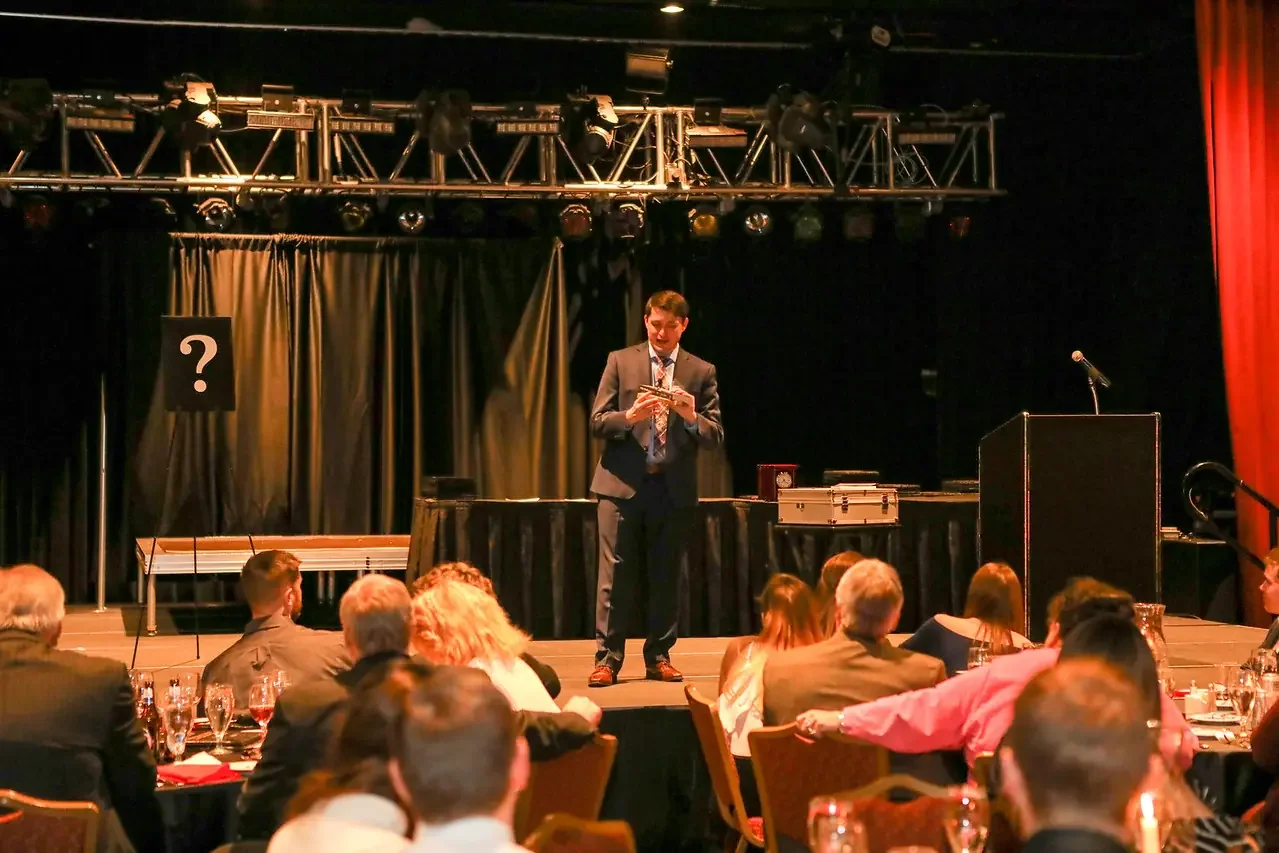
Trade Show Marketing With Magic: Turning Booth Spend Into ROI
Most exhibitors spend the biggest chunk of their trade show budget on booth design, signage, and swag, then treat staffing as an afterthought. None of that makes anyone stop walking. Trade show marketing with magic flips the spend. Instead of paying for a nicer backdrop nobody reads, you are paying for something happening in real time that a badge-scanning attendee physically cannot walk past.
The Marketing Problem, Not an Entertainment Problem
A trade show floor is the most competitive attention economy in events. Attendees have seen a hundred booths, a hundred spinning wheels, and a hundred candy bowls before lunch. The booth with a magician working the perimeter is the one thing on the floor that looks different from every other exhibitor, and different is what stops feet.
How This Actually Drives Marketing Numbers
Close-up magic builds a small crowd around a reaction, and that crowd is the marketing asset. Once four or five people have stopped to watch, other attendees stop to see what they are looking at. Your booth staff gets a warm, curious audience instead of people who scanned their badge to escape a pitch.
From Crowd to Lead, Without a Hard Sell
The magic does the stopping. Your team does the qualifying. Once a group has reacted together to something they cannot explain, conversation starts on its own instead of opening with a scripted line nobody wants to hear. That handoff is the actual ROI mechanism behind this strategy, not the trick itself.
Booth Traffic Data Over a Show Day
Booth traffic follows a predictable curve, a morning rush, a slow midday stretch when most exhibitors go quiet, and a pre-close push. Structuring magic in blocks around those windows keeps your booth active during the hours competitors' booths go dead, which is exactly when a differentiated booth earns the most attention per dollar spent.
What Gets Measured
Scanned leads per hour compared to booth staff working without a draw
Dwell time at the booth versus the show floor average
Follow-up meeting rate from booth-sourced leads versus other channels
Beyond the Expo Floor
Trade shows generate real business in the evening hospitality suites and client dinners as much as the show floor itself. Strolling magic works those rooms the same way it works a cocktail hour, giving your sales team a natural bridge into conversations with prospects they just met that day.
What It Costs
Trade show and convention bookings run in the standard $2,500 to $5,000 corporate range, priced by hours worked or show-day blocks, with multi-day coverage quoted as a package once show dates are confirmed.
Why the Fee Is Marketing Insurance
You already committed to the booth, the travel, and the staff hours. The fee protects that spend by making sure people actually engage with it instead of walking your investment past without a glance, which is the single most common way trade show budgets get wasted.
FAQ
How is this different from a standard trade show magician booking?
Same performer, same skill set, framed here around the marketing outcome, leads and booth traffic, rather than pure entertainment value.
Can you work alongside our sales team's pitch instead of replacing it?
Yes, that is the ideal setup. The magic builds the crowd and starts the reaction, and your team runs the actual sales conversation once people are engaged.
Do you track or report on booth performance?
I do not run your CRM, but I coordinate directly with your booth lead on peak traffic windows so the blocks align with your highest-value hours.
What size booth or space do you need?
A booth magician works a small footprint, typically the open area in front of or beside your booth structure, no stage required.
Can this work for a multi-day convention, not just a single show day?
Yes, multi-day coverage is common and typically priced as a package across the full show run.
Does this work for association and industry conferences, not just trade shows?
Yes, the same approach applies to expo halls at conferences, where the booth competition is just as heavy.
Ready to talk through your next show floor?
