
Corporate Entertainment That Works: 9 Ways Magic Beats a DJ and a Photo Booth
The best corporate entertainment does a job: it warms up a cold room, gives strangers something to talk about, and gets retold Monday morning. Here is how to pick it.
Corporate Entertainment That Actually Does a Job
Most corporate entertainment is filler. A playlist, a photo booth, a band nobody asked for. It fills time but it does not move the room. Good corporate entertainment has a job to do: warm up a cold crowd, give people who do not know each other a reason to talk, and hand your team a story they retell at their desks Monday morning. That is the standard this page is built around.
What Corporate Entertainment Is Supposed to Accomplish
Companies do not spend money on entertainment for its own sake. They spend it because the event has a goal. Networking, a product launch, a sales kickoff, an employee appreciation night. The entertainment either serves that goal or it competes with it. Interactive magic serves it, because the effect is the icebreaker. People react out loud, together, and the conversation writes itself.
Why "Background" Entertainment Fails
A band or a DJ sits in the corner and pushes sound into the room. Guests can ignore it, and most do. There is no moment that pulls a table together. Corporate entertainment that lands has to reach individual guests and give them a shared experience, not a soundtrack they talk over.
Strolling Magic: The Cocktail-Hour Fix
The hardest part of any corporate event is the first 45 minutes, when half the room is checking their phone and nobody wants to make the first move. Strolling magic solves that. I move table to table performing close-up material inches from people's hands. Within one effect, strangers are talking to each other about what they just saw.
The Main-Stage Comedy Show
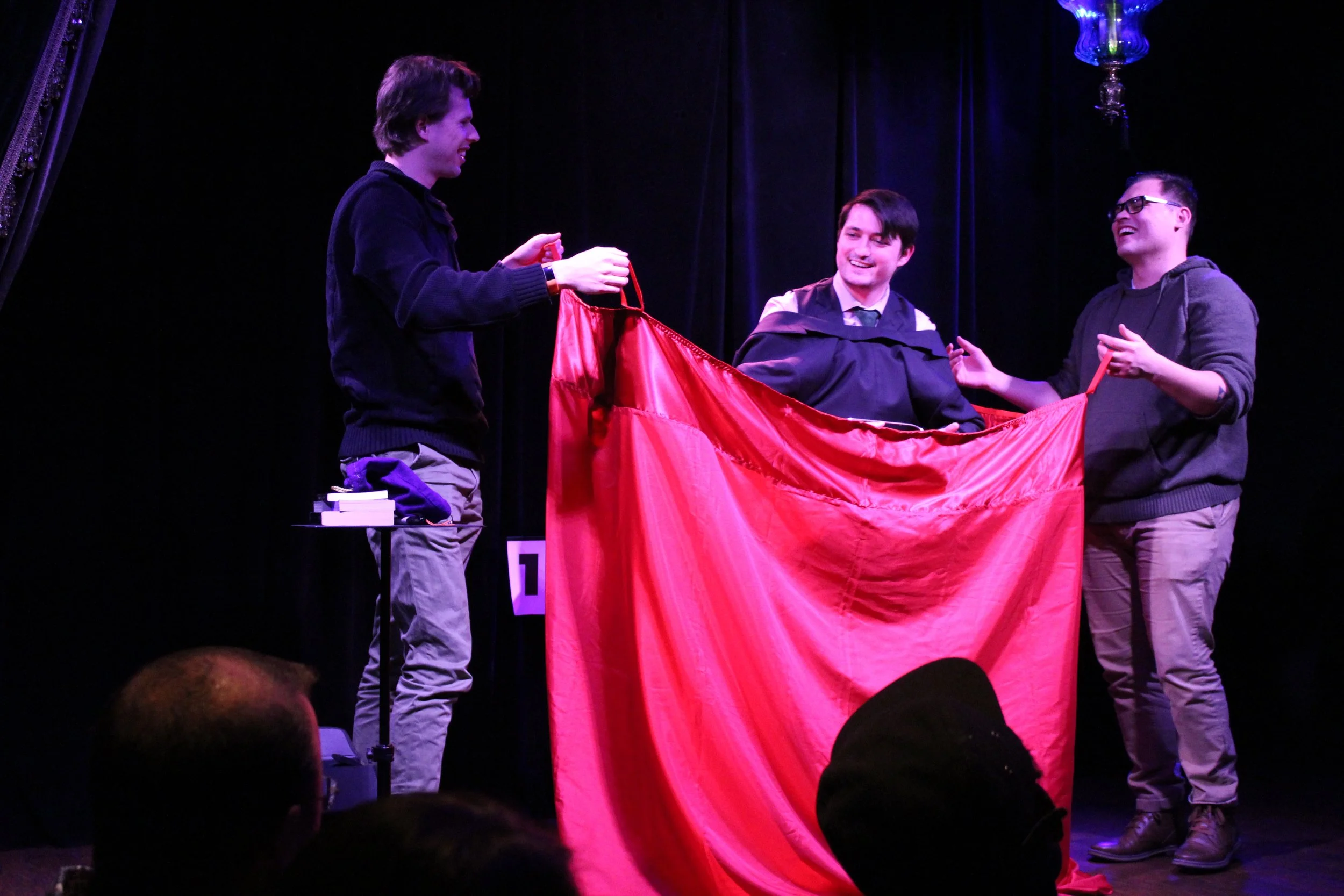
When you want the whole room facing one direction, the comedy magic show does that. It runs 45 to 60 minutes, guests participate from their seats, and volunteers come on stage and become the stars of the night. The laughs are aimed at the volunteers as the heroes, never at anyone's expense.
The Combo Play
The highest-value format is strolling during cocktail hour, then the stage show after dinner. The strolling primes the room so people already know who I am by the time the show starts. That familiarity makes the main show land harder. Most corporate clients who want a full evening handled book this.
Why Interactive Beats Passive Every Time
Passive entertainment asks nothing of the guest. Interactive entertainment makes them part of it. A guest who holds the card, picks the number, or ends up on stage remembers the night in a way no one remembers a playlist. Participation is what turns an event into a memory.
What This Does for Networking
Networking events die when people have nothing to talk about. Magic manufactures the opener. Two people who watched the same impossible thing happen now have an easy conversation, and the awkward part is skipped. Planners book this specifically to loosen up rooms full of people who do not know each other yet.
How It Reflects on the Company
The entertainment a company picks signals how it treats people. Cheap filler says the event was an afterthought. Sharp, professional, interactive entertainment says the company cared about the guest experience. That impression sticks to the brand, not just the night.
Conferences and Trade Shows
Corporate entertainment is not only for parties. On a conference floor or at a booth, close-up magic stops foot traffic and holds a crowd long enough for your team to have real conversations. It is a lead-generation tool disguised as entertainment.
What It Costs and Why
Professional corporate entertainment runs $2,500 to $5,000 depending on format, audience size, and travel, with local single-format bookings at the lower end. The fee is not for the tricks. It is risk reduction. If the entertainment fails, the event already happened and you do not get a second try. You are paying for the certainty that the room lands.
Why the Cheap Option Costs More
If someone quotes you a few hundred dollars, they either do not do corporate work regularly or the number changes before the contract is signed. The real risk is not the fee. It is a flat room in front of your clients, your executives, or your best employees, with no way to redo the night.
Setup and Logistics
For a stage show I need a 12 by 6 foot minimum stage, 60 minutes to set up and sound check before doors, a wireless mic, and a room in theater or banquet layout with no dance floor between the audience and the stage. Strolling needs almost nothing. I show up, work the room, and stay out of the caterer's way.
The Monday-Morning Test
The real measure of corporate entertainment is whether anyone is still talking about it two days later. If your people are describing the night to coworkers who missed it, the entertainment did its job. That retelling is the entire product. Everything else is setup.
Book Corporate Entertainment for Your Event
If you want entertainment that warms the room, drives conversation, and gets retold, start with a quick call about your event. Tell me the date, the venue, the headcount, and what the night is supposed to accomplish, and I will tell you the format that fits.
Frequently Asked Questions About Corporate Entertainment
What kind of corporate entertainment works best for a networking event?
Interactive close-up magic. It gives guests who do not know each other a shared reaction to talk about, which is exactly what networking needs. Strolling magic during the cocktail hour is the standard play for this.
How long does the entertainment run?
The comedy magic show runs 45 to 60 minutes on stage. Strolling magic covers a full cocktail hour or reception. For a full evening, most clients combine both.
How much does professional corporate entertainment cost?
Typically $2,500 to $5,000 depending on format, audience size, and travel. Local single-format bookings sit at the lower end. The fee reflects the certainty that the room lands, not just the performance.
Is the entertainment appropriate for a mixed corporate audience?
Yes. The humor is self-aware and never targets guests. Volunteers become the heroes of the show, so everyone stays comfortable and the content stays clean.
What do you need from the venue?
For a stage show: a 12 by 6 foot stage, 60 minutes of setup before doors, a wireless mic, and a theater or banquet layout. Strolling magic needs almost no setup at all.
Do you travel for corporate events?
Yes. I am based in St Louis and travel throughout the Midwest and nationally. Travel is built into the quote.
